Trending News
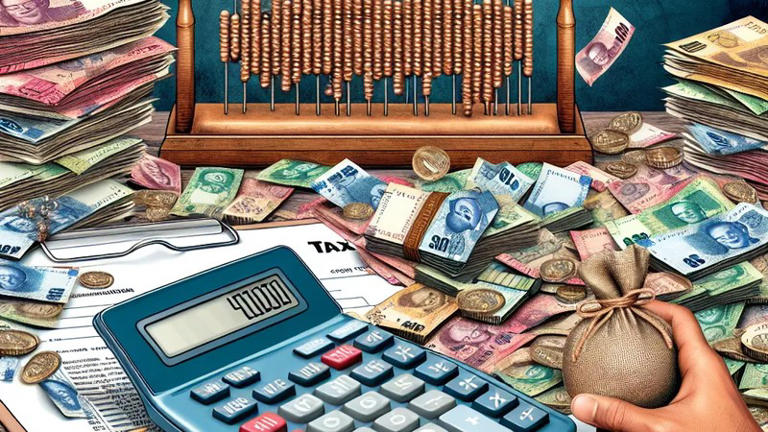
Taxpayers who would have been pushed into a higher tax bracket will be relieved because National Treasury will now need to rethink the tax tables and start over. Yesterday, Members of Parliament voted by a slim majority of 192 for versus 182 against, political parties to proceed with a fiscal framework that was agreed to between most parties and the ANC – excluding the DA.
This indicates that the National Budget, which was first presented more than a month ago, has finally been approved, with the condition that the National Treasury will find alternative ways to reduce some of the income tax burden in a nation where consumers are already struggling. According to statistics provided by the South African Revenue Service (SARS), there were 27 million people in South Africa at the end of March of the previous year. Only 7.6 million, or 28 percent of this tax base, were anticipated to submit returns. South Africans under the age of 65 who earn less than R95,750 do not have to pay taxes.
However, if the tax brackets aren't changed, millions of law-abiding citizens will end up in a higher bracket and have to pay taxes—the average rate was 21.3% last year. This would be just over R20,000 over the course of a year for someone who would have been pushed over the limit. This group includes more than a million South Africans, though precise figures are difficult to come by because the revenue service lists the number of taxpayers in various categories rather than the income-based tax percentages. SARS had collected a record gross amount of R2.303 trillion by the end of March 2025, which was an increase of 6.9% year-over-year in comparison to the estimated 5.4% nominal economic growth for the 2024/25 fiscal year. Refunds increased 8.2% year-on-year. It stated on April 1 that this brings the collected net amount to R1.
855 trillion, which is nearly R8.8 billion higher than the revised estimate and R114.0 billion higher than the R1.741 trillion of the previous year. According to Bobby Wessels, Senior Manager of Corporate & International Tax at AJM, "expected to have a positive impact on the average South African by easing financial pressure in an already challenging economic climate," adjusting the tax brackets to account for inflation. According to Wessels, one crucial step in preventing fiscal drag—a phenomenon in which taxpayers are pushed into higher tax brackets without a corresponding increase in real income—is to adjust income tax brackets in line with inflation. "South Africans' purchasing power would effectively decrease as a result of higher tax rates without such adjustments."
He stated that if the tax tables were not adjusted, this could cause a basic salary increase that is linked to inflation to push a taxpayer into a higher tax bracket. Moutloatse stated, "This still means that the tax takes up the same portion of those taxpayers whose salary has remained the same, while their same income is worth less in terms of real purchasing power." Moutloatse added that, given that taxpayers are overtaxed, scrapping of these tax proposals would simply mean that “they do not have to shell out more in tax on incomes that do not generally increase at the same rate.

After it became known that ANC politicians were going to be appointed chairpersons for the 21 Seta boards responsible...
5 minute read
5 minute read