Trending News

The expulsion of South Africa's former ambassador to the United States, Ebrahim Rasool, has sparked intense debate about the country's foreign policy and its relationship with the United States. The incident was critically examined by experts, who emphasized its broader implications for South Africa's position in international affairs.
Independent Political Analyst Professor Sipho Seepe argued that President Cyril Ramaphosa's approach to international relations resembles that of a “court jester” rather than a serious player on the world stage. He claimed that Ramaphosa's actions were driven by a desperate need for validation from Western powers, ultimately undermining South Africa's credibility and influence. “Ramaphosa has been pretending to be an influencer,” Seepe states, emphasising that the reality is stark; South Africa has minimal influence in international matters, leading to a foreign policy that is reactive rather than proactive.â
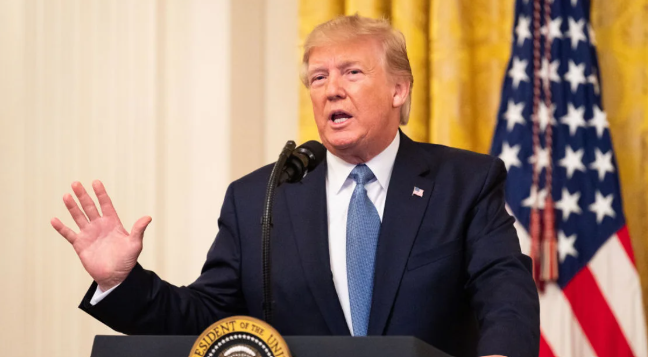
€� He said Rasool's expulsion clearly indicates the Trump administration's "no-nonsense" approach to diplomacy. According to Seepe, this swift action underscores a broader trend of assertiveness from the United States, compelling South Africa to navigate its diplomatic engagements cautious Dr., a political analyst These sentiments were echoed by Sandile Swana, who described the expulsion as "swift and predictable." He cautioned that South Africa must prepare for more diplomatic challenges. "The expulsion occurs in the midst of escalating tensions between South Africa and the United States, particularly in light of South Africa's actions at the International Court of Justice (ICJ) in November 2023."
There, South Africa successfully petitioned the ICJ to review what many international organizations have termed “genocide” in Palestine, asserting that Israel's actions constitute violations of international law. "This move was met with disapproval in Washington, which led to bipartisan proposals to reevaluate South Africa's participation in international forums due to its stance against Israel" at the beginning of 2024. He explained that South Africa's growing ties to Russia, China, the European Union, and Ukraine have been noticed, putting the country at odds with US interests as the latter tries to restructure international relations.
“The ANC's prioritisation of its party interests over national well-being has led to this diplomatic fallout,” he warned, suggesting that South Africa's current trajectory could alienate it from key international allies, mainly as it engages with nations like China and Russia. He went on to say that the political landscape in the United States is becoming increasingly polarized, with right-wing ideologies influencing public opinion with more rigid stances against perceived adversaries. He predicted, "Rasool's expulsion is likely the first of many actions targeting specific individuals within South Africa's diplomatic corps."
Trump's administration thrives on tensions like these. He went on to say that while there might not be any immediate effects on the economy, there might be significant long-term effects for American companies that operate in South Africa. Swana warned that the days of no-condition free trade agreements are over. Future negotiations will probably require South Africa to make concessions about its mineral resources, which will make trade dynamics more complicated. He argued that the ANC must carefully balance internal pressures with the need for coherent international relations as right-wing influence grows stronger in the United States. “South Africa must reassess its diplomatic strategies, particularly regarding ongoing processes at the ICJ and the International Criminal Court, which may shape future interactions with the US.â
€� However, he cautioned that South Africa must prepare for a more transactional relationship with the US, especially under a Trump administration likely to demand significant concessions.
5 minute read
5 minute read