Trending News
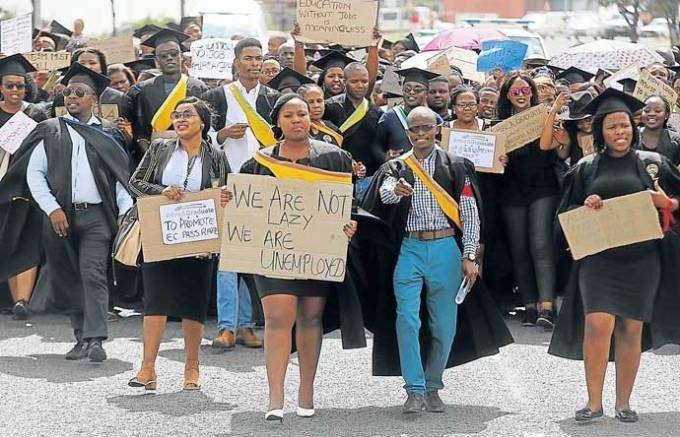
The contrast in transition rates between inexperienced youth and those with experience is stark. Youth with experience outperform those without by a margin of 4 to 1, highlighting the significant benefits of experiential learning, apprenticeships, and workplace exposure in combating youth unemployment. In 2022, the overall transition rate of youth into employment was 4.7%, up from 3.5% in 2021, while adult rates remained stable at 6.7%.
Education also plays a critical role in job acquisition and retention, with individuals holding tertiary qualifications having better chances of moving from unemployment or inactivity into employment compared to those without a matric. The Quarterly Labour Force Survey (QLFS) for the first quarter of 2024 revealed that only 9.8% of employed youth were graduates. Limited educational attainment and socio-economic disadvantages contribute to high unemployment rates and the significant proportion of youth not in employment, education, or training (NEET) in South Africa.
Young women face more significant challenges in securing decent employment compared to their male counterparts, with education being a key factor in improving job prospects. The Labour Market Dynamics in South Africa (LMDSA) 2022 report shows that individuals with tertiary qualifications are more likely to transition into employment from periods of unemployment or inactivity than those without matric. Men have higher transition rates into employment than women, with rates of 6.5% and 4.6% respectively in 2022. Data indicates young women are more vulnerable in the labour market compared to young men. In 2024, the absorption rate for young men was 31.9%, while for young women, it was 24.2%. The unemployment rate among young females rose to 49.4% in 2024, up from 46.1% in 2004.
Overall, women face higher unemployment rates and lower absorption and labour force participation rates compared to men. The Labour Force Participation Rate (LFPR) measures the proportion of the working-age population that is either employed or unemployed, while the Absorption Rate (AR) measures the proportion of the working-age population that is employed. Women also often bear family responsibilities, which can hinder their educational attainment and career progression in the South African labour market. Labour market dynamics vary across the nine provinces, with urban areas generally offering better employment prospects than rural areas. For example, the Western Cape has higher absorption rates and lower unemployment levels compared to KwaZulu-Natal and the Eastern Cape.
Discouraged job seekers—those available for work but not actively seeking employment—represent a significant demographic. In 2024, 2.8% of young individuals aged 15 to 34 were categorized as discouraged in the Western Cape, compared to 13.9% in Limpopo. From 2004 to 2024, seven out of nine provinces saw declines in the proportion of discouraged youth, with the Northern Cape experiencing the most significant reduction of 7.3 percentage points.

ActionSA has written to President Ramaphosa to ask that the Minister of Employment and Labour, Nomakhosazana Meth, be f...

6 minute read

6 minute read