Trending News
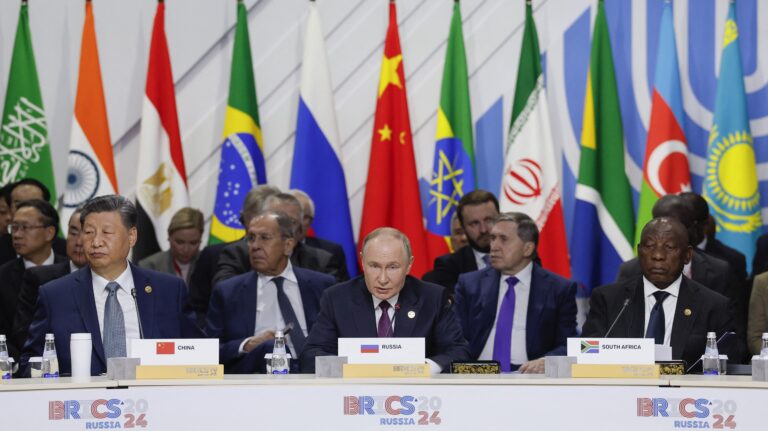
The 2024 BRICS Summit, hosted by Russia in Kazan, emphasized the bloc's expanding influence and vision for a multipolar world, challenging the dollar-dominated financial system and Western-led global governance. This year, BRICS welcomed six new members—Egypt, Ethiopia, Iran, Saudi Arabia, the UAE, and Argentina—further extending its geopolitical reach and strengthening its role as a platform for South-South cooperation.
These additions reflect the bloc’s ambition to serve as an alternative alliance to traditional Western-dominated institutions, potentially providing a counterbalance in global politics and economics. A key focus of the summit was "de-dollarization," where BRICS members aimed to reduce their dependence on the U.S. dollar by encouraging trade in local currencies. However, logistical and financial obstacles have limited progress in developing a BRICS currency, which remains an ambitious long-term goal.
The BRICS countries, particularly Russia and China, seek to leverage the group to reduce reliance on Western financial systems, such as SWIFT, by establishing alternative settlement systems. However, internal differences in political systems and strategic priorities—especially between democracies like India and authoritarian states like Russia and China—pose challenges to cohesive action within the bloc. This year’s summit also underscored Russia's resilience in its international standing despite Western sanctions following its invasion of Ukraine. Russian President Vladimir Putin, aiming to use BRICS as a tool to counter Western isolation, held extensive meetings with other leaders to deepen alliances and explore trade and diplomatic opportunities outside Western frameworks.
In sum, the BRICS 2024 Summit illustrated the bloc's growing ambitions but also highlighted the practical challenges of uniting diverse economies under shared goals. The continued expansion and efforts at reform indicate BRICS’ resolve to reshape global structures, even as member states navigate internal tensions and the complexities of creating effective alternatives to established Western systems.
5 minute read

6 minute read