Trending News

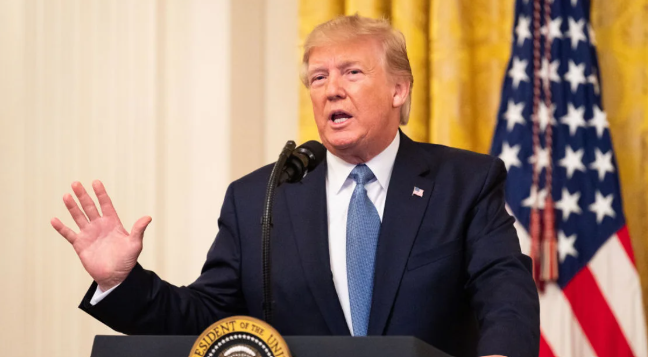
US President Donald Trump is doubling down against the BRICS bloc of fast-growing economies — including Brazil, Russia, India, China and South Africa — warning that their push to undermine the US dollar's dominance threatens America’s economic supremacy.
Just as BRICS leaders convened in Rio de Janeiro for their annual summit, Trump on Sunday vowed to slap an additional 10% tariff on any nation backing the group’s "anti-American policies," piling pressure on top of existing and threatened trade levies. "Trump has a reason to worry," Alicia Garcia-Herrero, a senior fellow at the Brussels-based think tank Bruegel, told DW. "The BRICS is very clearly anti-Western. The organization's motto is "to change the global order." Dollar diversification, but no real alternative BRICS has recently intensified efforts to reduce reliance on the dollar by promoting trade in local currencies among members.
Russia and China are leading the so-called dedollarization movement, settling energy deals in rubles and yuan, driven by Western sanctions and tariffs. India, meanwhile, has paid for cheap Russian oil since 2023 in yuan, rubles, and even the United Arab Emirates' dirham. Grander ambitions — like a gold-backed common currency, dubbed the "Unit" — have so far stalled amid internal rifts between powerful BRICS members. India, wary of the dominance of China's yuan, has rejected the plan, while 2025 summit host Brazil also wants to prioritize local currency trade over a unified currency. Expanding from a mostly economic forum, the leaders emphasized cooperation on artificial intelligence (AI) governance, climate change and global health, while also denouncing global conflicts.
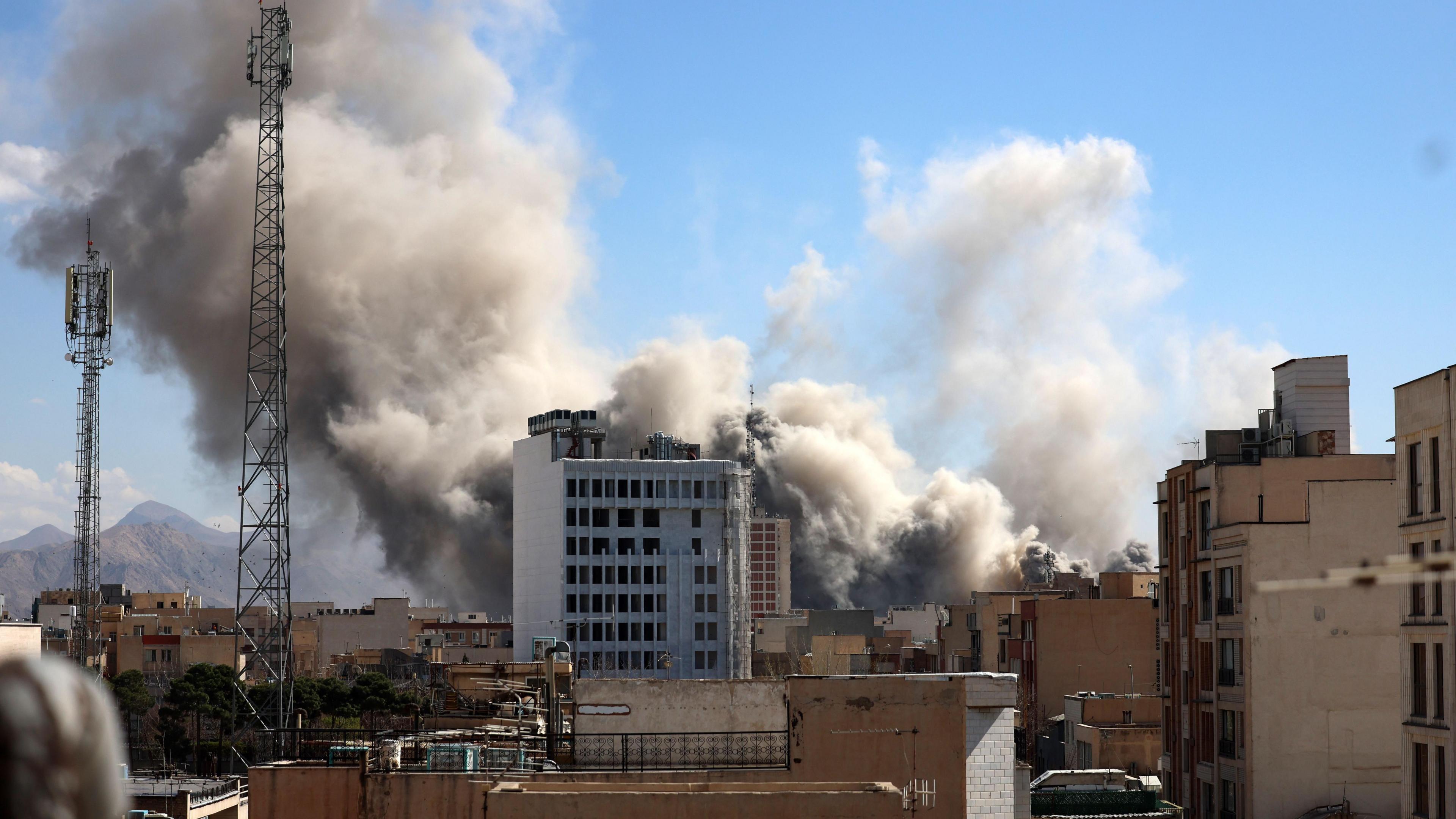
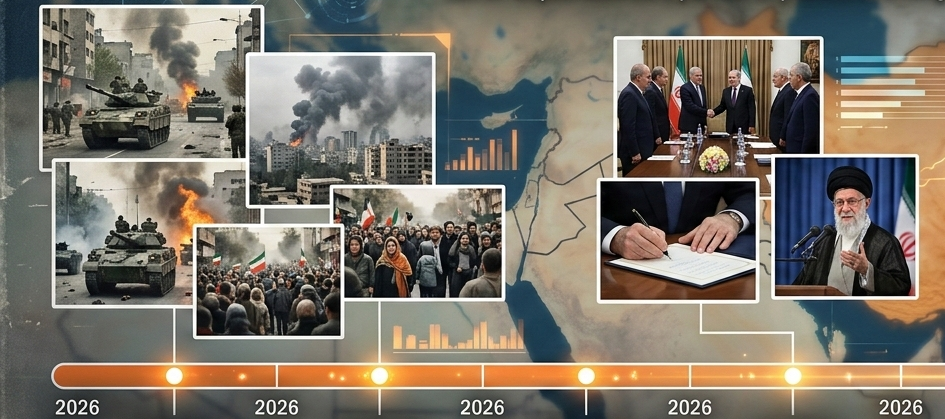
BRICS leaders said last month's attacks on Iran were a "violation of international law," without mentioning the US or Israel. They also reaffirmed support for Palestinian statehood and denounced the use of "starvation as a weapon" in Gaza. The declaration avoided criticizing Russia directly, reflecting a cautious approach due to Russia's membership, but it did condemn Ukraine's strikes on Russian infrastructure and called for a "sustainable peace settlement." The BRICS leaders also reaffirmed their commitment to multilateralism, international law, and reforms to the United Nations Security Council, including permanent seats for Brazil, India and an African nation.
BRICS growing fast but making little progress With Egypt, Ethiopia, Iran, the UAE and Indonesia recently joining and nearly new partner or affiliate nations like Algeria and Malaysia in tow, BRICS is clearly on a rapid growth path. Many countries are drawn to the bloc for pragmatic reasons, seeking a multipolar world order less dominated by the West. They believe BRICS will amplify the voice of the Global South on the world stage. Iran and Russia, two countries that are worried about Western sanctions, are relying on BRICS to help protect their economies through BRICS Pay and BRICS Bridge, two planned alternatives to SWIFT, the Western payment messaging system. Others, including Ethiopia and Egypt, seek development financing free of the political strings often tied to Western aid. But Trump's latest threat could make them think twice.
"Suddenly, being part of BRICS has a cost," Garcia-Herrero told DW. "This will probably discourage some, particularly the poorer countries." Yet despite its growing membership and lofty promises, BRICS has struggled to translate ambition into action. The bloc lacks institutional cohesion and suffers from deep geopolitical rifts, most notably between India and China. Efforts to build alternative financial institutions have also been cautious and limited in scope. The New Development Bank (NDB), touted as a rival to the World Bank, has so far approved $39 billion in loans, versus the World Bank's $1 trillion plus. BRICS leaders are quickly realizing that expansion doesn’t equal influence.
Without a clear strategic vision, stronger coordination and tangible alternatives, some watchers believe the bloc risks becoming a symbolic club rather than a transformative force. "Trump shouldn't be worried," economist Herbert Poenisch told DW. "BRICS is still in the early stages and bridging the many differences in priority will be a tall order." Ideological differences hard to reconcile Despite their many differences, BRICS leaders did take a strong stance on Trump's tariffs during the Brazil summit. In a declaration published Monday (June 7), the leaders criticized unilateral sanctions and protectionist tariffs, without naming Trump directly. The bloc warned that such measures "skew global trade" and violate WTO rules.
BRICS leaders said last month's attacks on Iran were a "violation of international law," without mentioning the US or Israel. They also reaffirmed support for Palestinian statehood and denounced the use of "starvation as a weapon" in Gaza. The declaration avoided criticizing Russia directly, reflecting a cautious approach due to Russia's membership, but it did condemn Ukraine's strikes on Russian infrastructure and called for a "sustainable peace settlement."
The BRICS leaders also reaffirmed their commitment to multilateralism, international law, and reforms to the United Nations Security Council, including permanent seats for Brazil, India and an African nation.

The government's public response to the Trump administration's tariffs on South Africa demonstrates how difficult the...
5 minute read
3 minute read