Trending News
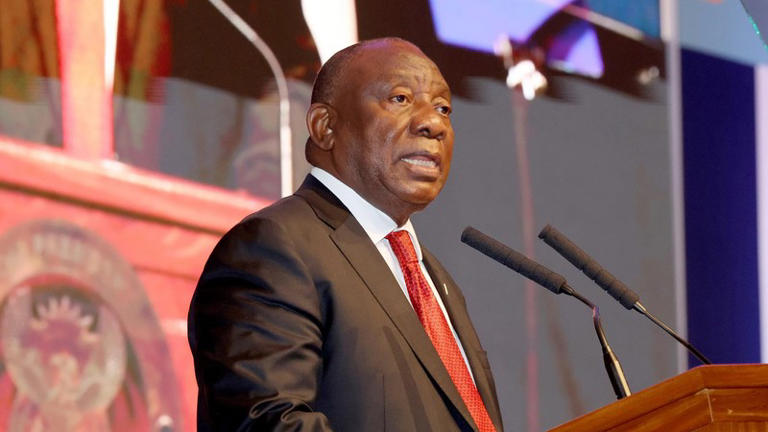
On Wednesday, President Cyril Ramaphosa said that failing to spend the infrastructure budget by municipalities and provinces was treason against South Africans. "The problem of underspending is a very big problem, especially when it comes to spending on allocations for infrastructure like housing, education, water, and roads.
I actually often characterise it as treason against the people of South Africa when monies that had been allocated are not spent and are returned to the National Treasury," Ramaphosa said. He was responding during a question-and-answer session in the National Council of Provinces. ANC MP Kenny Mmoiemaang had enquired about whether the government has assessed the impact of inadequate spending by provinces and municipalities on their commitments to deliver quality and essential services to communities, particularly crucial infrastructure such as housing, schools, and roads.
Mmoiemang also wanted to know whether the government has been engaging provinces and municipalities that continue to underspend and fail to adequately utilise their allocated service delivery budgets. In his response, Ramaphosa said inadequate or slow capital expenditure has, in many ways, hampered the delivery of services that are due to the people. "This results in delays in housing delivery, stalled infrastructure projects such as schools, water, as well as sanitation and waste management infrastructure projects." It also erodes the public trust in the State's ability to improve the livelihood of our citizens and exacerbates service delivery protests.
"He blamed the inability of municipalities to spend their capital projects on poor management, poor planning, weak implementation capacity, and inadequate financial and supply chain management. "National government continues to engage directly with our municipalities and provinces to demonstrate persistent underspending that is unacceptable." Ramaphosa said there were interventions in place, such as the budget monitoring forums coordinated by the National Treasury to track in-year spending and detect low expenditure patterns at an early stage, and support programmes by the Cooperative Governance and Traditional Affairs (Cogta) Ministry.
There were also capacity-building programmes that were organised by the Municipal Infrastructure Support Agency, and the Cabinet has appointed an inter-ministerial committee to support distressed municipalities. "One of the priorities of this administration is to build a capable and developmental state, and involves strengthening inter-departmental accountability and introducing early warning systems," he said. Ramaphosa added that Operation Vulindlela is implementing reforms to strengthen local government, and dedicated groups have been established in eThekwini and the City of Johannesburg to address challenges with water and electricity infrastructure. To assist in the implementation of institutional and financial reforms to increase infrastructure investment, the metro trading reform program has been initiated.
"A lot of changes are going to be made as a result of this innovative initiative. These measures will help address the root causes of underspending and ensure infrastructure is maintained and expanded to improve service delivery." Ramaphosa responded, "The Auditor-General has highlighted the lack of consequence management when both elected and employed officials were unable to meet their obligations," when asked about mechanisms to ensure consequence management for failure to spend on infrastructure allocations. That does not absolve the elected officials or representatives," he said. "All of us need to understand that consequence management is necessary, and if we do not meet the expectations of the citizens, we should follow through.
It is a matter we are addressing as we professionalise the public service and insist elected representatives should be accountable and responsible for the performance of their duties that they are expected to execute," Ramaphosa said.

The Basic Education Employment Initiative (BEEI) has returned, and President Cyril Ramaphosa has hailed it as a crucial...
5 minute read
5 minute read