Trending News
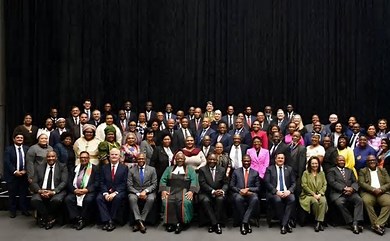
When the Government of National Unity (GNU) was cobbled together after the 2024 elections, it was sold to South Africans as a bold reset, an answer to years of stagnation, corruption, and deepening inequality. A "miracle of democracy," some called it, but one year in, the miracle has started to look like a managed illusion. Yes, there have been bright spots. The GNU avoided a fiscal cliff by backing down from a VAT increase.
It brought long overdue scrutiny to government departments, especially those now under DA leadership. Even if only for a brief moment, it gave the markets something to cheer about. But for millions of South Africans, especially outside Gauteng and the Western Cape, daily life remains as precarious as ever. In provinces like the Eastern Cape and Limpopo, you wouldn’t know a new government was in charge. The GNU - some call it a grand coalition between the ANC and DA - was supposed to deliver stability but instead, it delivered strain. The DA and ANC, the two biggest coalition partners, can’t agree on core policy questions from tax to land to education.
Budget battles have exposed just how fragile this marriage of convenience is. Exhausted by being left out, smaller parties like UAT have already walked away. There is still no formal coalition agreement. No roadmap and no accountability framework. We are watching a national experiment unfold in real time and there is no safety net. And while the ministers argue in Parliament, the people continue to wait for electricity, for jobs and for water that doesn’t come out brown. Take the Eastern Cape. According to Stats SA, nearly 90% of schoolchildren there rely on government-provided nutrition. Social grants are available to roughly two-thirds of households. That’s not a social safety net, that’s survival.
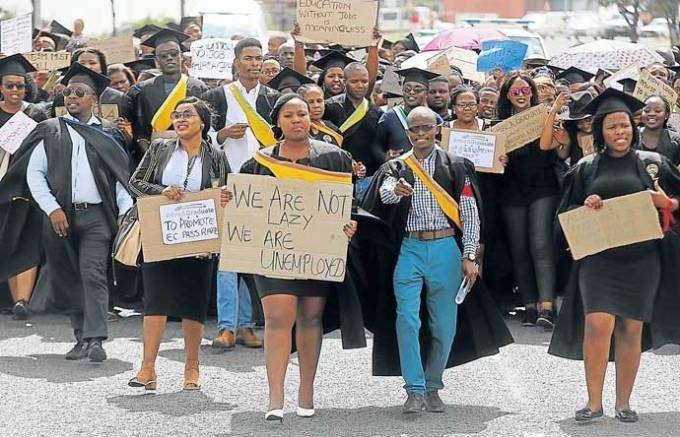
In KZN, where the MK Party upended the ANC’s grip on power, which has seen the provincial leadership hop into bed with the IFP, NFP and DA to run a minority government in the province, service delivery has flatlined. Municipalities are paralysed. Political infighting has spilled into the streets in the form of protests, with residents still waiting for basic infrastructure that was promised long before the GNU came to power. The coalition government's use of the phrase "working together" has been effective. But it has failed at the one thing voters truly care about - getting things done. A Coalition of the Elite? A difficult question needs to be asked: Has the GNU evolved into an alliance of elites that prioritizes perception over performance? The situation for investors has improved. The rand held. Business confidence ticked up.
Cyril Ramaphosa got his photo op in Washington, even if Donald Trump hijacked it with white genocide conspiracy theories. But what about the unemployed youth in Mthatha or the underpaid domestic worker in Umlazi? Has the GNU seen their lives improve? Right now, the GNU is coasting on political novelty. But that won’t last. Without delivery, unity becomes irrelevant. And the longer the coalition fails to show tangible results, the more frustrated voters grow. One year into the GNU, the verdict is sobering. The GNU has been grossly ineffective in changing the lives of South Africans. In a country where every day without progress deepens mistrust, indecision becomes its own kind of betrayal. With untapped human resources potential coupled with the wealth under our feet and in our oceans, South Africa does not need a miracle.
Furthermore, the GNU is not delivering at this time.

EFF president Julius Malema has again called on the DA to leave the Government of National Unity (GNU), effectively mak...
5 minute read
5 minute read