Trending News
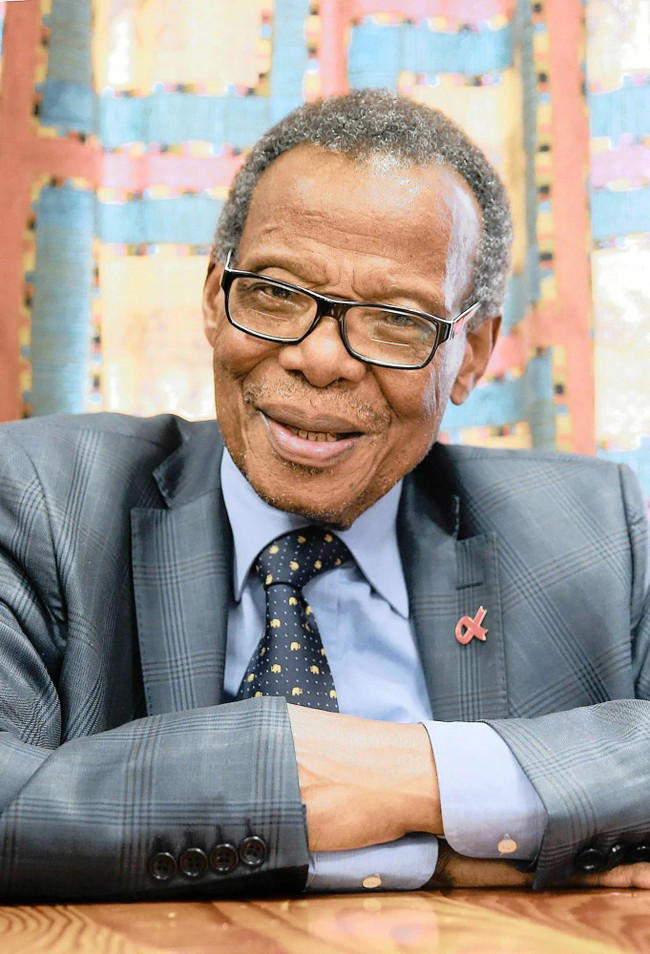
THE story of the Inkatha Freedom Party (IFP) represents one of the most complex narratives in South Africa’s liberation history. The IFP emerged from the political laboratory of the Bantustan system, which would come to define both its strengths and its fundamental contradictions. It was established in 1975 by Prince Mangosuthu Buthelezi.
We must confront the IFP's dual legacy in order to comprehend its current place in South African politics: as a movement that genuinely sought to advance African interests within the constraints of apartheid and as a product of ethnic engineering. The Bantustan policy, formally initiated with the Bantu Authorities Act of 1951, was apartheid’s most sophisticated attempt to divide and conquer black resistance. The National Party government aimed to dismantle any notion of a unified black political consciousness by creating ethnically defined "homelands."
The IFP’s origins in this system would forever mark it with ambiguity – was it a genuine liberation movement or an instrument of apartheid’s divide-and-rule tactics? This question becomes even more pertinent following Buthelezi’s passing in September 2023. With its founding patriarch gone, the IFP stands at a crossroads. Its future depends on whether it can reconcile its controversial past with the demands of contemporary South African politics. To assess this, we must examine the full historical arc of the IFP – from its Bantustan origins through its violent clashes with the ANC, its post-1994 governance record, and its current struggle for relevance in a rapidly changing political landscape.
The Bantustan Foundations – Between Collaboration and Resistance The IFP’s story properly begins with the creation of the KwaZulu Bantustan in the early 1970s. The apartheid government’s homeland policy reached its full implementation during this period, with the Bantu Homelands Citizenship Act of 1970 and the Bantu Homelands Constitution Act of 1971 providing the legal framework for so-called “self-governing” territories. Buthelezi’s appointment as Chief Minister of KwaZulu in 1972 placed him in a uniquely contradictory position. On one hand, he was clearly part of apartheid’s tribal governance structure. Contrary to Transkei, Bophuthatswana, Venda, and Ciskei leaders, however, his 1976 refusal to recognize KwaZulu's nominal independence suggested a more nuanced strategy.
This decision earned him cautious respect from some anti-apartheid activists who saw him as working within the system to undermine it. The KwaZulu administration under Buthelezi did achieve notable developmental successes. Between 1972 and 1994, the number of schools in the territory increased from 1,900 to over 5,000. Clinics were built in rural areas that had never had healthcare facilities. Roads and infrastructure projects connected previously isolated communities. These concrete advancements stood in stark contrast to the ANC's absence during its exile years for many rural Zulus. However, critics argue that this development came at too high a political cost. Buthelezi gave apartheid's ethnic separatism credibility by participating in the Bantustan system.
His emphasis on Zulu cultural nationalism, while popular in rural areas, played directly into the regime’s strategy of dividing black resistance along tribal lines. This fundamental tension – between pragmatic governance and political complicity – would define the IFP’s entire history. The Birth of Inkatha – Liberation Movement or Ethnic Project? When Buthelezi launched Inkatha in 1975 (initially as a cultural movement before its political transformation), he framed it as reviving the traditions of King Solomon kaDinuzulu’s 1920s Inkatha movement. This cultural grounding gave the organisation deep roots in Zulu society, particularly in rural areas where traditional authority structures remained strong. Initially, Inkatha maintained connections with the exiled ANC.
Buthelezi had been a youth league member in the 1940s and 1950s, and some ANC leaders initially saw Inkatha as a potential internal ally. However, tensions quickly emerged over fundamental strategic questions. The ANC, influenced by its exile experience and alliances with socialist bloc countries, advocated armed struggle and international sanctions. Buthelezi, by contrast, argued that sanctions would primarily hurt black workers and that armed resistance would lead to unnecessary bloodshed. He positioned Inkatha as advocating for negotiated change through non-violent means. This ideological divide widened throughout the late 1970s and early 1980s. The ANC increasingly saw Inkatha as a rival rather than an ally, while Buthelezi portrayed the ANC as dominated by urban intellectuals disconnected from rural realities.
The key partners in the Government of Provincial Unity (GPU) have called for an urgent meeting to address their diffe...
3 minute read
6 minute read